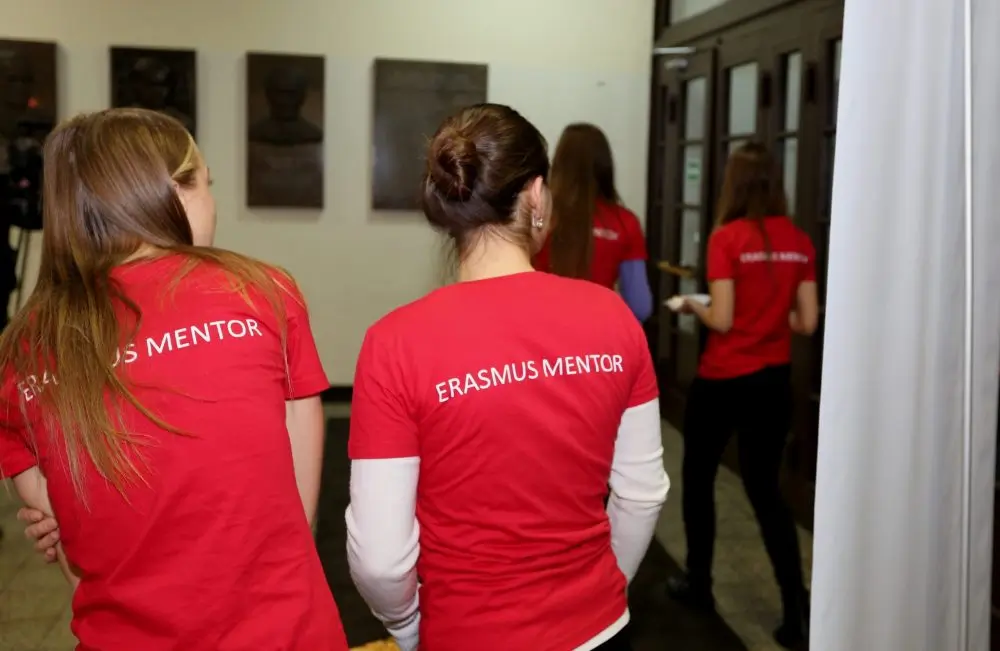

The aspiring coaches are very satisfied with the international experience
ONLINE ADMISSION FOR INTERNATIONAL STUDENTS
Admission Deadlines (2025–2026)
| Standard Programs | Candidates Needing Double Legalization / IMPAS* | |
| Application submission | 03 Nov 2025 – 01 May 2026 | 03 Nov 2025 – 01 Apr 2026 |
| Submission of additional documentation for academic recognition | 03 Nov 2025 – 30 Jun 2026 | 03 Nov 2025 – 30 May 2026 |
| Interviews with applicants | 05 Dec 2025 – 30 Jun 2026 | 05 Dec 2025 – 30 May, 2026 |
| Acceptance letters | 4 Jan 2026 – 15 Jul 2026 | 4 Jan 2026 – 15 June, 2026 |
*IMPAS = International Master for Performance Analysis in Sports
Application registration deadlines for Doctoral degree (PhD) studies for EU, non EU, and EEA citizens: ALL YEAR.
Admission requirements in short:
Documents: Apostilled (Hague countries) or legalized (non-Hague) diploma & transcript; non-English must be translated and notarized.
Grades: CGPA ≥ 65%, no subject < 60%. Percentage is taken from the transcript’s official scale.
TRP: criminal record (last 2 yrs), translated & Apostilled/double legalized.
English: IELTS 5.5+, TOEFL 46+, or equivalent; waived if English is a native language.
📌 Important! See the full document and application requirements to ensure eligibility → REQUIRED DOCUMENTS
STEPS OF ADMISSION TO LSU:
Receive a Conditional Acceptance Letter & Invoice.
The candidate receives a conditional acceptance letter along with the tuition fee invoice.
Make a Payment and get a Mediation Letter.
After paying the tuition fee, the candidate receives a mediation letter, which is needed to apply for a temporary residence permit to study in Lithuania.
1. Copy of the passport (for non EU citizens) or ID card (only for EU and EEA citizens).
The applicant’s passport/ID must be valid for at least 2 years from the date of submission of the application and must not be replaced or changed during the admission process.
2. Copies of the educational documents* (Secondary School Certificate, University Diploma, etc.) and its supplements** (Academic Transcript/Mark Sheets) in original language and translated into English by certified translator, certified by Notary.
*To be eligible for admission, applicants must have an overall CGPA of at least 65%, with no individual subject mark below 60%.
Please note that the percentage is determined only according to the official grading/percentage conversion scale provided on the applicant’s transcript. LSU does not convert CGPA into percentage using mathematical formulas or self-interpreted ranges. If the transcript does not state an exact final percentage, the admission decision is based solely on the CGPA and the official grading table issued by the institution.
**The academic transcript, records of grades, or a similar document should list all the subjects (their full names), grades, and credits and/or hours.
3. All educational documents submitted for admission must be officially certified in one of the following ways:
If the country is a member of the Hague Convention: Documents must have an Apostille (preferably an electronic Apostille).
If the country is not a member of the Hague Convention: Documents must be legalized by the Ministry of Foreign Affairs and/or the diplomatic mission or consular office of that country (documents without Apostille or legalization will not be accepted for admission in application portal).
4. CV (Resume). It must include:
Title of the thesis/project.
Name of the supervisor.
Mode of presentation – e.g., publicly defended, submitted electronically, or otherwise.
5. Copy of the certificate of English proficiency: IELTS Academic 5.5+, TOEFL iBT (0–120) 46–59, Cambridge English exam 160+, Pearson PTE Academic 50+, LanguageCert IESOL B2, or Duolingo English Test 90+.
All applicants must provide proof of English proficiency.
Applicants who have completed their previous education in English or for whom English is a second official language must provide a Duolingo English Test result of at least 90+.
Exception: candidates whose native language is English or English is the only official language of their country do not need to provide any English test.
6. Copy of the document proving payment of the application fee (non-refundable): the payment must clearly indicate the name of the applicant, regardless of who makes the payment (the applicant themselves or a third party). Payments without the applicant’s name will not be accepted, and the application will not be processed.
All documents must be of the highest scanning quality. All scans must be made from original documents, be in full size, colour, clear and legible. Any scans that do not meet such requirements will be disregarded.
📌 Important! Submitting your documents means you agree that the University may share your information with other institutions for verification purposes.
View Full Admission Rules for International Students at Lithuanian Sports University.
Evidence of participation in a Student Research Society.
Copies of published articles.
Information about conference participation and any research presented.
1. An applicant applies for a Temporal Residency Permit (non EU Temporal Residence Certificate) via Migris system: https://www.migracija.lt/en/app/form-wizard
2. An applicant submits data for a Temporary Residence Permit at the nearest Lithuanian Embassy, Consulate, or through an external office (VFS Global). In case a student does not receive TRP, a tuition fee is refunded, excluding bank transfer payment (see refund policy below);
3. All international students must have a health insurance valid in Lithuania. More information: https://www.lsu.lt/en/studies/practical-information/health-care-insurance/
4. To apply for the temporary residence permit (TRP), a student must obtain a document from his/her country about his/her criminal record, which must be issued for the last two years. If the person has lived in two or more different countries during the last two years, a criminal record must be issued from all those countries. Additionally, the criminal record must be translated into English and Apostilled. If the applicant cannot Apostille the criminal record, it must undergo double legalization. In the case of double legalization, please reach out to the University for further assistance. In case of double legalization, please reach out the University.
FEES:
Application fee
All applicants have to pay a non-refundable application fee of 200 EUR.
Tuition fee
A conditionally accepted student has to pay a full tuition fee for the first study year before applying for TRP (a payment cannot be done in installments).
📌Important! Tuition & Deposit payment rules:
All EU/EEA and non-EU/EEA students must pay a non-refundable deposit of 1,000 EUR, which will be deducted from the tuition fee.
Non-EU/EEA students must pay at least one year of tuition in advance before the University can issue the documents required to apply for a temporary residence permit (TRP).
Refund policy for non-EU/EEA students:
a. If the TRP is not received by 1 October, the tuition fee will be fully refunded.
b. In all other cases, refunds are made minus the 1,000 EUR deposit.
c. Any foreign transaction fees are always borne by the student.
The academic year officially begins on 1 September.
First-year Bachelor and Master students are advised to arrive in September to complete registration, orientation, and preparation before classes start on 1 October.
SCHOLARSHIPS
For holders of foreign qualifications seeking for state funded study places: www.lamabpo.lt
Lithuanian State Scholarship: https://studyin.lt/
For contacts:
+370 612 81605
admission@lsu.lt
Sporto Str. 6, LT- 44221 Kaunas, Central chambers, room 101
The aspiring coaches are very satisfied with the international experience
The new program can become a long-term solution
After a two-year international development process, the Global Physical Literacy (GloPL) Action Plan has been officially released. Lithuanian Sports University (LSU) participated as a partner in preparing this document, which aims to provide a strategic plan for the field of physical literacy. Prof. Dr. Arūnas Emeljanovas and Assoc. Prof. Dr. Brigita Miežienė joined more than 90 members from 59 countries.
The Action Plan responds to stagnant global physical activity levels by proposing a shift in focus toward the quality of movement experiences. In the document, physical literacy is understood as a holistic concept that integrates emotional (emotions), cognitive (mind/brain), and physical (body) capabilities. The goal of the Action Plan is to foster knowledge, understanding, motivation, self-confidence, and to empower individuals to move meaningfully and participate in physical activity, exercise, and sport throughout their lives.
Key areas for action:
Advocacy: increasing awareness and political support
Practice: improving the delivery of high-quality experiences
Education: supporting professional development and learning
Assessment: developing meaningful ways to monitor progress
Research: strengthening the evidence base
As a partner, Lithuanian Sports University recognizes this Action Plan as an important tool for collaboration across health, education, sport, and community services. The Action Plan is a call for all sectors to work together to help physical literacy thrive worldwide.
The full document is available here: https://blogs.deakin.edu.au/glopl/the-glopl-statement/
LSU is launching a collaboration with Mobeta Ltd.
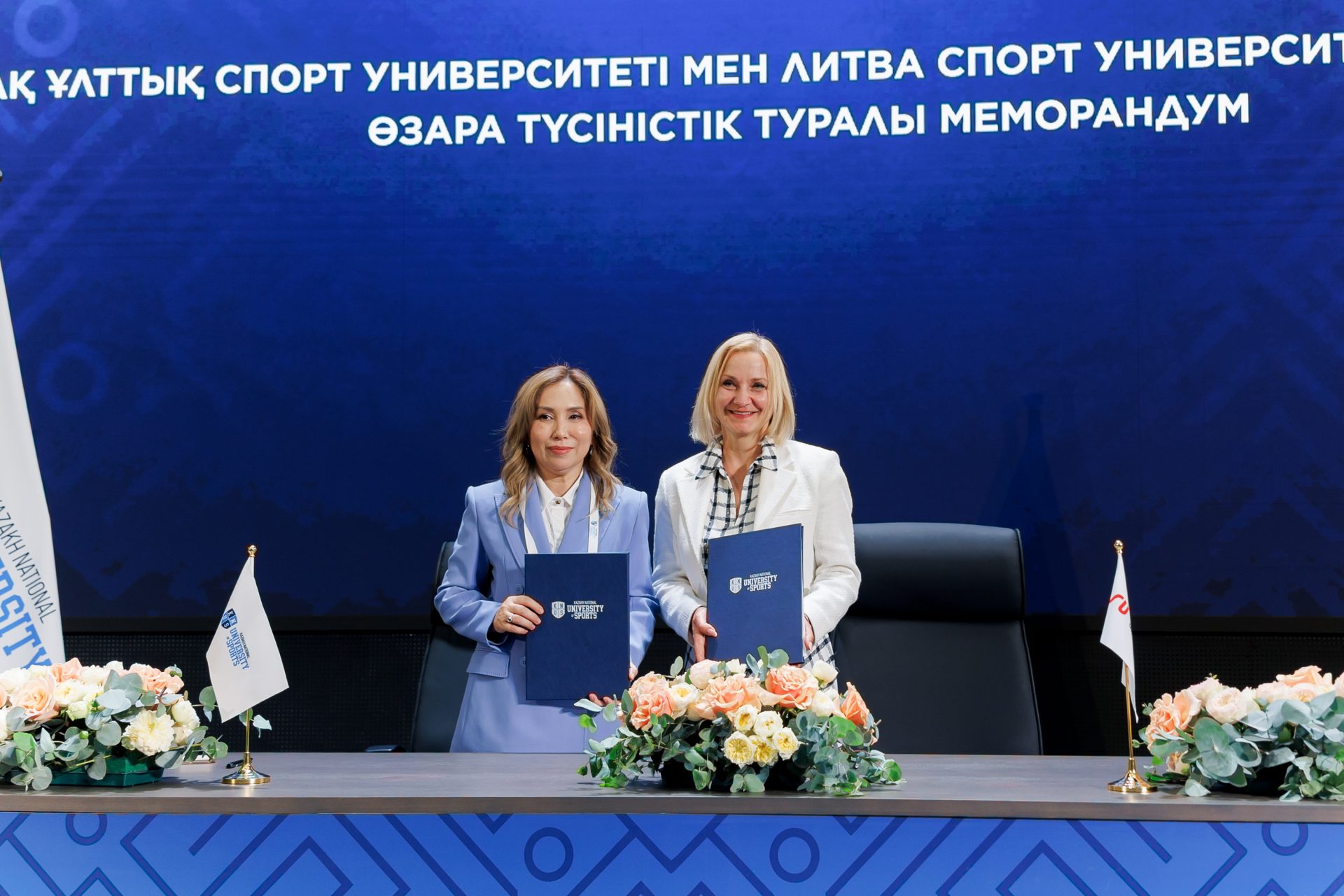
Lithuanian Sports University (LSU) and the Lithuanian Paralympic Committee (LPC) have renewed their long-term cooperation to strengthen Paralympic sport, coach education, and inclusive education in Lithuania.
The cooperation agreement was signed by LSU Rector Diana Rėklaitienė and LPC President Mindaugas Bilius.
“This step will strengthen coach education, expand opportunities for para-athletes in their sporting careers, and contribute to inclusion not only in sport but also in society. Working together, we will strive for even higher quality in sport and broader promotion of Paralympic sport. LSU is an important partner in developing Paralympic sport,” says M. Bilius.
Cooperation with the Lithuanian Paralympic Committee is an important part of LSU’s strategy, strengthening the university’s role nationally and internationally and contributing to building a more inclusive society through sport.
More about the partners: Lithuanian Paralympic Committee
Can talent be identified from genes? Can genetics help athletes achieve the highest results and avoid injuries?
Answers to these questions will be addressed by one of the speakers at the Lithuanian Sports University (LSU) Sport Forum on October 23rd – the acclaimed scientist of sport medicine and endocrinology from Israel, Prof. Dr. Alon Eliakim.
The topic of his speech will be “Genetics and competitive sports”, in which he will outline the latest research on the influence of genetic factors on athletic performance. According to the scientist, although genetic assessment is still in its infancy in the world of sports, it could become an extremely important tool for both talent identification and individualised training processes.
“Genetic testing may become an important element in optimising and individualising athletes’ training processes in the future. However, it should not be limited to world-class athletes – such testing can also be beneficial to national-level athletes,” – emphasises Prof. Dr. A. Eliakim.
The professor will support his presentation with practical examples of how genetic analysis can be used not only to identify talent and select a sport, but also to prevent sport-related disasters and improve training processes.
Prof. Dr. A. Eliakim is a paediatrician and endocrinologist, the Chairman of the Paediatric Department at Meir Medical Centre, and a Professor of Paediatrics at Tel Aviv University. Additionally, he lectures at the Zinman College of Physical Education at the Wingate Institute. He is a former Israeli champion and record holder in the 400-meter run, with extensive experience in sport medicine, having served as the physician for the Israeli National Olympic Team during the Sydney, Athens, and London Olympic Games.
The scientist is also known for more than 275 peer-reviewed publications and 20 book chapters on childhood obesity, bone development, hormonal responses to training, and the genetic factors influencing athletic performance.
The LSU Sport Forum is an annual platform for scientific and practical discussions, bringing together academics, coaches, sport professionals, and policymakers from the whole Europe. At this year’s event, participants will hear presentations on fair play in sport, the importance of social capital, and the influence of genetics in competitive sports.
Sport is more than a competition. It is a matter of trust, transparency, and respect for the rules. However, in today’s world, these values are increasingly overshadowed by match-fixing and betting scandals. On October 23rd, Corentin Segalen, an expert from the French Gambling Authority and the Chair of the Group of Copenhagen, will speak at the Lithuanian Sports University (LSU) Sport Forum about how to ensure fair play at major sporting events.
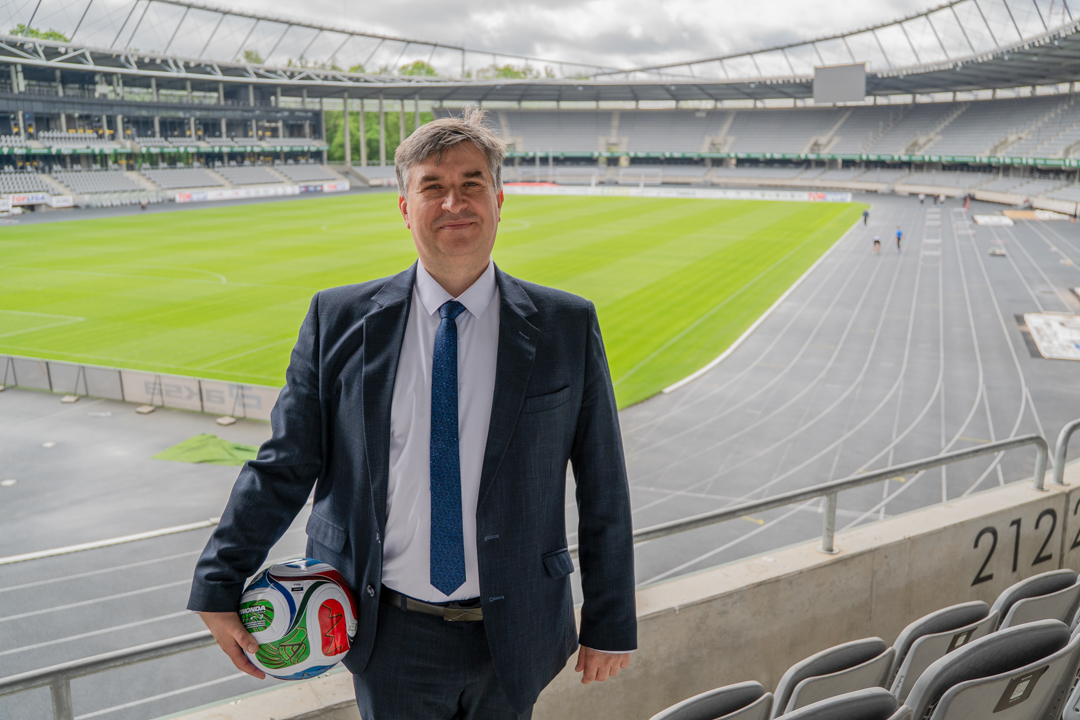
C. Segalen will present his keynote speech on “Ensuring Fair Play: Antimanipulation Strategies at the Olympic Games”, which will reveal how multifaceted strategies were developed and implemented to guarantee the integrity of sports competitions at the Olympic Games of Paris 2024.
The researcher will also discuss data integration techniques – cross-analysis of betting records, odds, and stake monitoring, which allows to detect possible manipulation. The discussion will include collaboration between regulatory authorities, sports organisations, and betting operators that facilitate real-time intelligence sharing and ensure coordinated responses as well.
“Match-fixing is not unique to only some national leagues. It is a risk that affects all sports and all levels of competition. The Olympic Games, as the ultimate expression of excellence and the focus of worldwide attention, naturally attracts criminal networks seeking to exploit the betting market,” – says C. Segalen.
Ensuring fair play is not just a technical issue related to betting supervision or regulation. It is a shared commitment to the entire sports community. Corentin’s speech at the LSU Sport Forum will offer a new perspective on the world of sports – a realm where geopolitics, law, technology, and ethics collide.
“To ensure transparency in sport, a joint effort is required. The transparency of competitions reflects not only our attitude towards sport, but also the values of our society. Combatting match-fixing is a matter of safeguarding the future of sport,” – states C. Segalen.
Every year, representatives of sport science, practice, and policymaking from all across Europe come together at the LSU Sport Forum. At this year’s event, participants will discuss the importance of fair play, social capital, and genetics in contemporary sports, seeking to address the question: what truly shapes the future of sports?
More about the LSU Sport Forum: information and registration
How can social support motivate people to exercise more and live healthier lives?
The Sport Forum is a platform where academics, researchers, coaches, athletes, and policymakers convene every year